Standing up for Renters at City Council
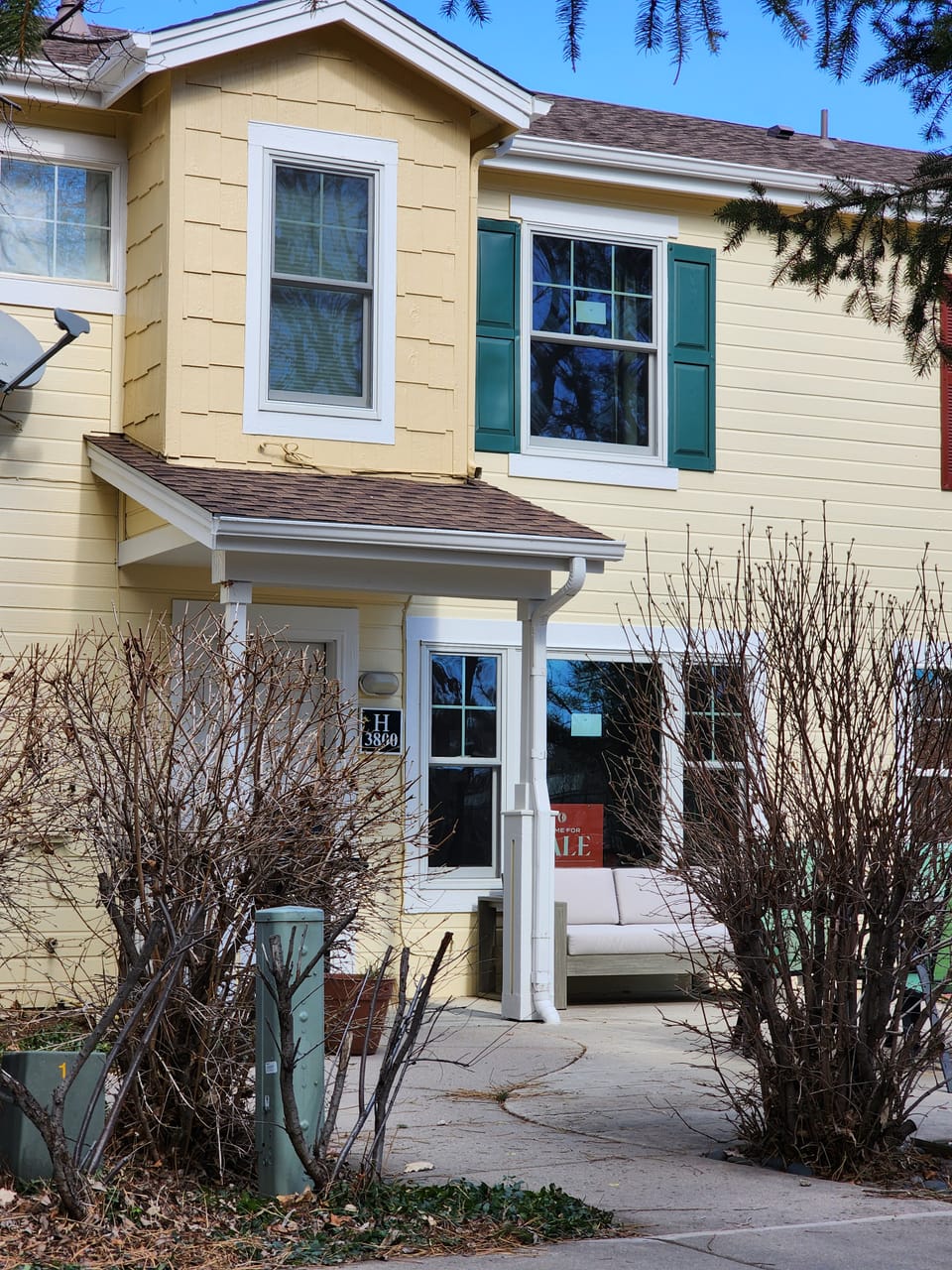
We wanted to share with the community a letter we sent yesterday to Boulder City Council. Please read our position here and consider weighing in with city council as well.
Dear Council Members,
Boulder Progressives is writing to express our strong opposition to the proposal to restrict rental housing on University Hill. We have serious concerns about both the underlying assumptions driving this proposal and the process through which it is being introduced.
First and foremost, the premise of this proposal is deeply troubling. At its core is the suggestion that homeowners are somehow more desirable members of our community than renters, and that neighborhoods are better off when rental housing is limited in favor of owner-occupied properties. Renters are not a “problem” to be solved. They are our neighbors, students, workers, families, and community members who contribute to Boulder in countless ways. The idea that someone needs to own expensive property to be considered a valuable member of our community is one we should unequivocally reject.
Restricting rental housing won't make these properties affordable to Boulder families. Homes in the University Hill neighborhood routinely sell for well over $1.5 million, with much of that value tied to the land rather than the structures themselves. Many of the homes being demolished are aging, deteriorating properties that are likely to be redeveloped regardless. The realistic question isn't whether these properties will be preserved for families, but whether they'll be redeveloped into housing for multiple students or multimillion-dollar mansions for a single wealthy household.
Preventing a home from being rented does not make it either affordable or attractive to a family. It could instead result in properties sitting vacant, being used as second homes, or remaining underutilized. In a city already struggling with housing affordability, a declining population, and an aging population, we should be expanding opportunities for people to live here, not restricting them.
More broadly, this proposal treats the presence of renters as the underlying problem rather than identifying specific issues that need to be addressed. If there are concerns about noise, nuisance properties, unsafe conditions, or other neighborhood impacts, we should address those issues directly through appropriate enforcement of existing policies. Housing tenure is not a proxy for whether someone is a good neighbor. Restricting rental housing across an entire neighborhood because of concerns about certain properties is an extraordinarily blunt approach that could harm far more people than it helps.
We are also deeply concerned by the suggestion of using Wildland-Urban Interface (WUI) zones to restrict housing. Weaponizing legitimate wildfire safety concerns to advance an anti-housing agenda would be a gross misuse of public authority. Wildfire safety deserves serious, evidence-based solutions, not policies that use public safety as a pretext to limit housing opportunities.
We also see myriad problems with a mechanism based on a saturation limit. It sets up a competition to be among the first to get a rental license, to avoid missing out. It would allow homeowners to game the system by getting rental licenses they didn’t intend to use, so as to prevent others from using them. And it’s possible some areas might already be above the limit, which raises the question of how to decide who’s going to lose out. The mechanism seems like an administrative quagmire.
Finally, we strongly object to the process being proposed. These are consequential policy questions that would affect thousands of renters, students, homeowners, and other community members. The questions you ask staff to investigate establish the assumptions and direction of the work that follows, and the questions presented here are far from neutral. A last-minute, five-minute agenda request at the final meeting before a new council is seated is an entirely inappropriate way to initiate a policy discussion of this magnitude. If council believes these issues warrant further consideration, they should, at an absolute minimum, be addressed through the formal work planning process, with meaningful opportunities for the incoming council and affected community members to shape the scope of that work.
Boulder has spent years working to address our housing shortage and create a more inclusive community. Pursuing policies that explicitly limit who can live in our neighborhoods based on their ability to own property would be a significant step backward.
We must find ways to solve complex problems without hurting those who already face some of the largest barriers to living in our community.
The Boulder Progressives Board