Tell City Council: No DDA — Don't Divert Our Tax Dollars to Downtown's Biggest Landlords
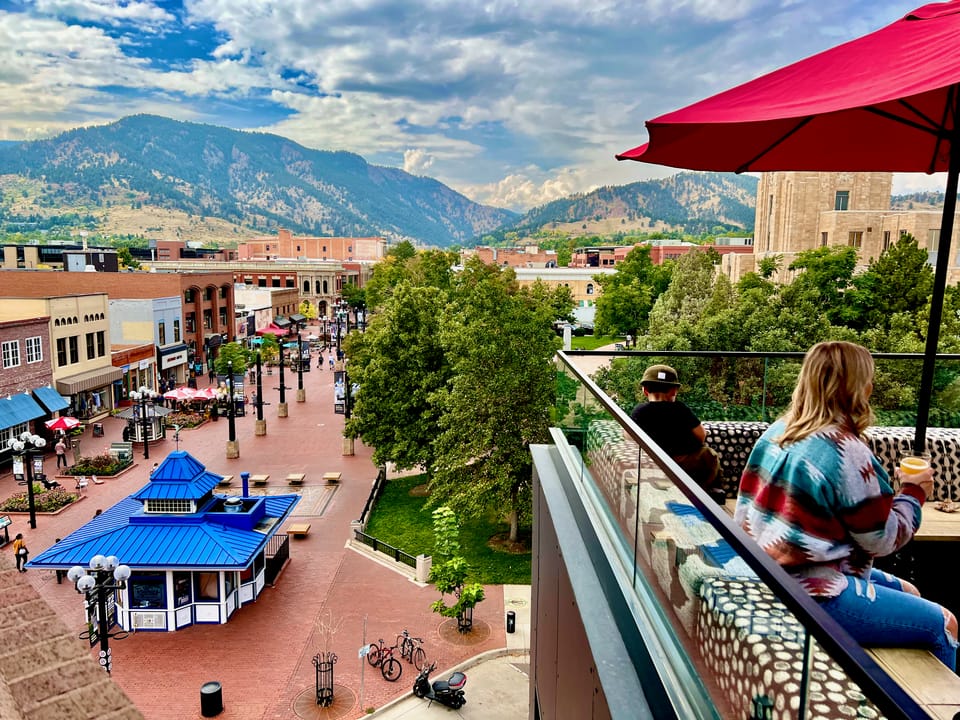
On August 6, City Council will vote on whether to send a new Downtown Development Authority (DDA) to the November ballot. If they do, fewer than 2,500 people would get a ballot to decide it. If approved, it would divert tax dollars Boulder voters already dedicated to transportation, open space, parks, schools, libraries, and the general fund, and redirect them to downtown business incentives for the next 30 to 70 years.
We have just three weeks to weigh in on a 70-year decision. A few council members have voiced skepticism, and a few have voiced support for the DDA. This is not a done deal. We're asking you to contact Council before August 6 and tell them not to refer this DDA to the ballot as currently structured.
Why this matters
- Almost nobody gets a vote, and some get more than one. State law limits the DDA election to property owners, commercial lessees, and residents inside the downtown boundary, an estimated fewer than 2,500 ballots. A property owner who holds downtown real estate through multiple LLCs can get a ballot for each one, even living outside the country, while the 98% of Boulder residents whose citywide tax dollars are actually being redirected get no vote at all.
- This is a 30- to 70-year raid on money you already voted to dedicate. Much of the revenue at stake was approved by Boulder voters specifically for transportation, open space, and parks. The DDA would capture growth in citywide sales and property tax revenue for an initial 30-year term, extendable twice up to 70 years, without asking the voters who approved those dedications in the first place.
- Staff can't explain what problem this actually solves. Downtown's struggles are driven largely by high office vacancy. Asked directly at a Transportation Advisory Board meeting whether the DDA has a plan to convert vacant offices to housing, staff said no firm plans exist.
- It looks more like a subsidy for large property owners than help for small businesses. Downtown commercial real estate is concentrated among a small number of major landlords. A structure that funnels public tax dollars into redevelopment, run by a board legally required to have a downtown stakeholder majority, is more likely to benefit those large owners than the independent shops and restaurants it's sold as helping.
- Growth is coming with or without the DDA. Let’s be honest about why. The DDA would keep all downtown tax revenue above today's level, while downtown is still down from the pandemic. But downtown is about to recover on its own anyway, including the Sundance Film Festival's move to Boulder. That recovery, plus decades of ordinary inflation, would count as "new growth" and go to the DDA instead of the city, whether or not the DDA does anything at all.
- It's a one-way transfer of public assets. The city would hand downtown's parking garages, a University Hill lot, and the land under them to the DDA. City staff frame this as a transfer between two public entities that would need council sign-off before any sale — but nothing in the current plan requires a future council to block a sale to private developers, or requires that proceeds from one come back to the public. The DDA is explicitly authorized to sell these properties, with no compensation to the city if it does.
- The real losses to schools, the county, and libraries could be double what's been presented. Staff estimates that the DDA could cost BVSD $35–103M, Boulder County $23–66M, and the library district $4.6–13M over 30 years. As large as those numbers are, they're only half the real risk: they assume the DDA agrees to split the new property tax revenue evenly with those entities. There's no guarantee it will. That split is left entirely up to a future DDA board that doesn't exist yet, and under state law, if no agreement is reached, the DDA can keep all of it instead of half, meaning the real losses to schools, the county, and libraries could be twice as high as the numbers above.
What to do
Contact City Council before August 6 and ask them to vote no on referring this DDA to the ballot this year. Just a sentence or two in your own words can carry tremendous weight!
Note: The city's official channel is the web form linked above, not an email address. Comments submitted this way are added to a public archive of emails to Council, so keep that in mind when writing.
Read more
- Mike Mills' guest opinion in Boulder Reporting Lab
- Boulder Progressives' earlier statement on the DDA
Thank you for taking action. Decisions like this shape Boulder for decades — and this is the moment to weigh in before it's out of Council's hands and into a ballot process almost none of us can vote in.
Boulder Progressives